Aviation weather guides
Everything we publish on reading, forecasting and flying around weather. Written in house, reviewed on a schedule, free to read.
15 guides

Crosswind and Runway Condition: Turning Wind Into a Number
How to convert a reported wind into a crosswind component, what a demonstrated limit actually is, and why a wet runway lowers the usable figure.

The Preflight Weather Briefing: A Checklist That Works
A briefing is a sequence, not a website. Here is the order that answers the route questions before the aerodrome ones, and the checks people skip.

Weather Minimums: What VFR and IFR Actually Require
The difference between VFR and IFR is not skill, it is what the weather allows. Here are the visibility and cloud rules, and where the numbers come from.

Winter Operations: De-icing, Holdover Times and Contaminated Runways
Why winter departures collapse into queues, what a holdover time really is, and how a runway condition code changes the numbers a crew has to meet.

Monsoon and Tropical Aviation Weather: Flying the Wet Season
What the monsoon actually does to flights, why tropical convection is a daily rather than seasonal problem, and how the reports read differently in the tropics.

Aviation Weather by Region: What Each Part of the World Briefs For
The same aircraft meets a different set of problems in every part of the world. Here is what dominates each region, when, and which service publishes it.

Turbulence: The Four Types, and Which Ones Can Be Forecast
Clear-air, mechanical, convective and wake turbulence come from different causes and are predicted with very different success. Here is which is which.
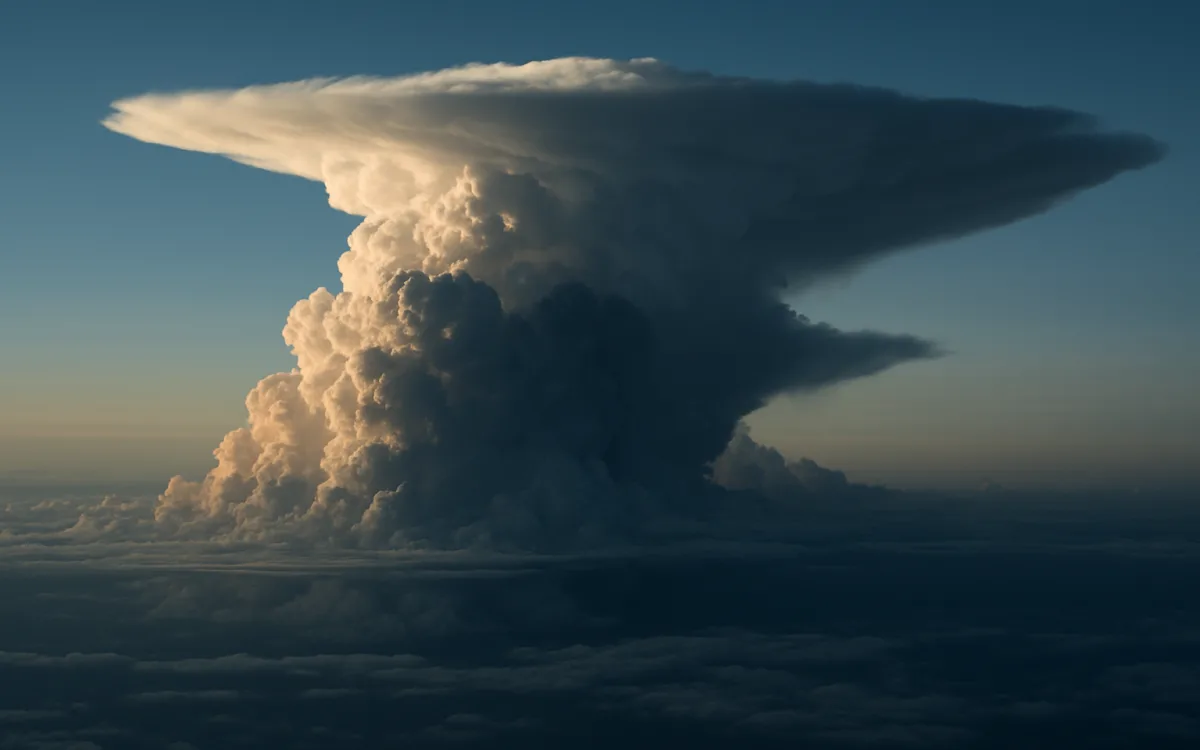
Thunderstorms and Convective Weather: Why Aircraft Go Around Them
A cumulonimbus contains every serious weather hazard at once. Here is what is inside one, how far aircraft stay away, and why the avoidance is lateral.

Aircraft Icing Explained: Where It Forms, and Why It Is So Serious
Ice changes the shape of a wing, and a wing is only a shape. Here are the three types, the temperature band that produces them, and what the reports tell you in advance.

METAR and TAF Abbreviations: The Complete Decoder Table
Every abbreviation you will meet in a routine report, grouped by where it appears — intensity, descriptor, phenomenon, cloud, trend and the runway groups.
How to Read a TAF: Change Groups, Windows and Probability
A TAF is not a METAR for later. It is a forecast written in change groups — BECMG, TEMPO, PROB30 — and reading it means reading the transitions.
How to Read a METAR: Every Field, in Order
A METAR is one line in a fixed order. Read it left to right and each group answers a different question — here is what each one says and what it decides.
Where Aviation Weather Actually Comes From (and Which Sources Count)
Which organisation issues the report you are reading, why only some sources are legally usable for a flight, and what the free apps are really showing you.

How Weather Affects Flights: Delays, Diversions and Cancellations
Why a clear sky at your airport still produces a two-hour delay, what actually triggers a diversion, and which weather cancels a flight outright.
What Is Aviation Weather? The Five Numbers That Decide a Flight
Aviation weather is the same atmosphere reported differently: cloud base in feet, visibility in metres, wind to ten degrees. Here is what each number decides, and why.