Aviation weather in Africa
Harmattan dust reduces visibility across West Africa for months, the intertropical convergence zone drags a belt of severe storms north and south with the seasons, and coverage of the reports themselves varies by state.
At a glance
| Main hazards | Dust and sand, Thunderstorms, High temperature, Low visibility, Turbulence |
|---|---|
| Most demanding season | December – March |
| Thunderstorm season | March – June |
| Representative airports | FAOR · HECA · DNMM · HKJK · GMMN |
| Official sources | South African Weather Service aviation · ASECNA (West and Central Africa) |
The services linked above are the authoritative source for this region. This page explains what their reports contain; it is not a substitute for an official briefing.
What these hazards mean
Related guides
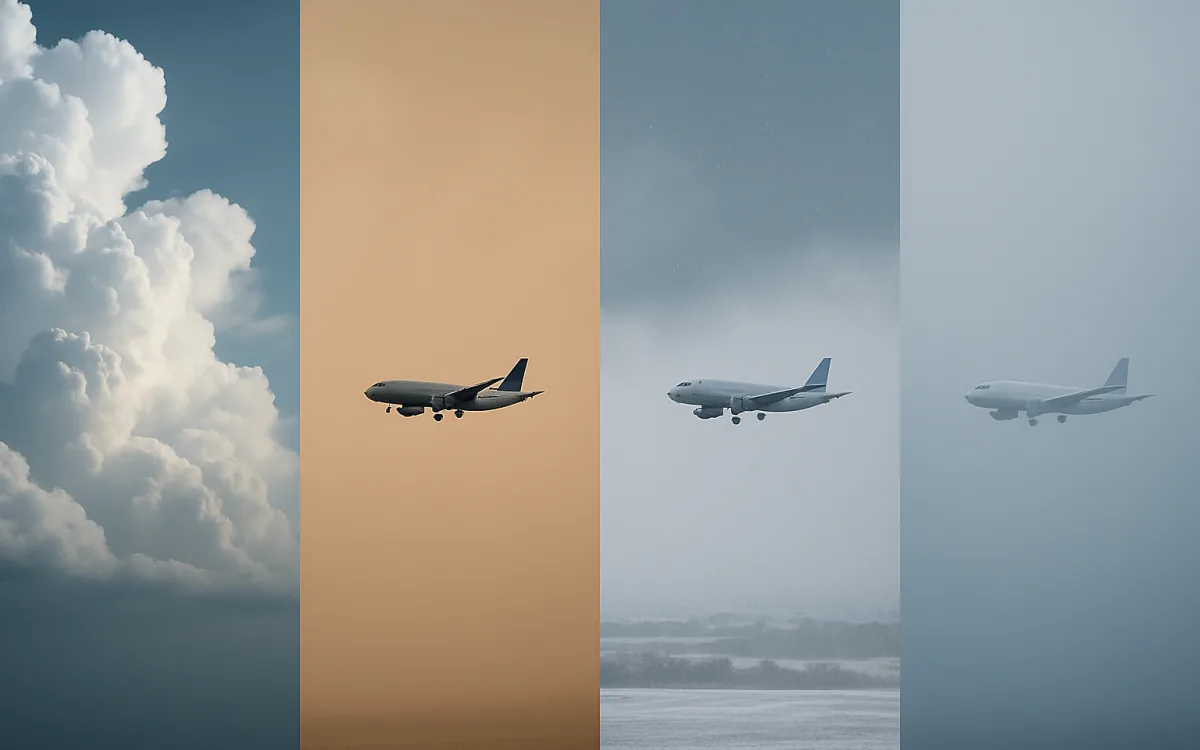
Aviation Weather by Region: What Each Part of the World Briefs For
The same aircraft meets a different set of problems in every part of the world. Here is what dominates each region, when, and which service publishes it.

Where Aviation Weather Actually Comes From (and Which Sources Count)
Which organisation issues the report you are reading, why only some sources are legally usable for a flight, and what the free apps are really showing you.

How to Read a METAR: Every Field, in Order
A METAR is one line in a fixed order. Read it left to right and each group answers a different question — here is what each one says and what it decides.